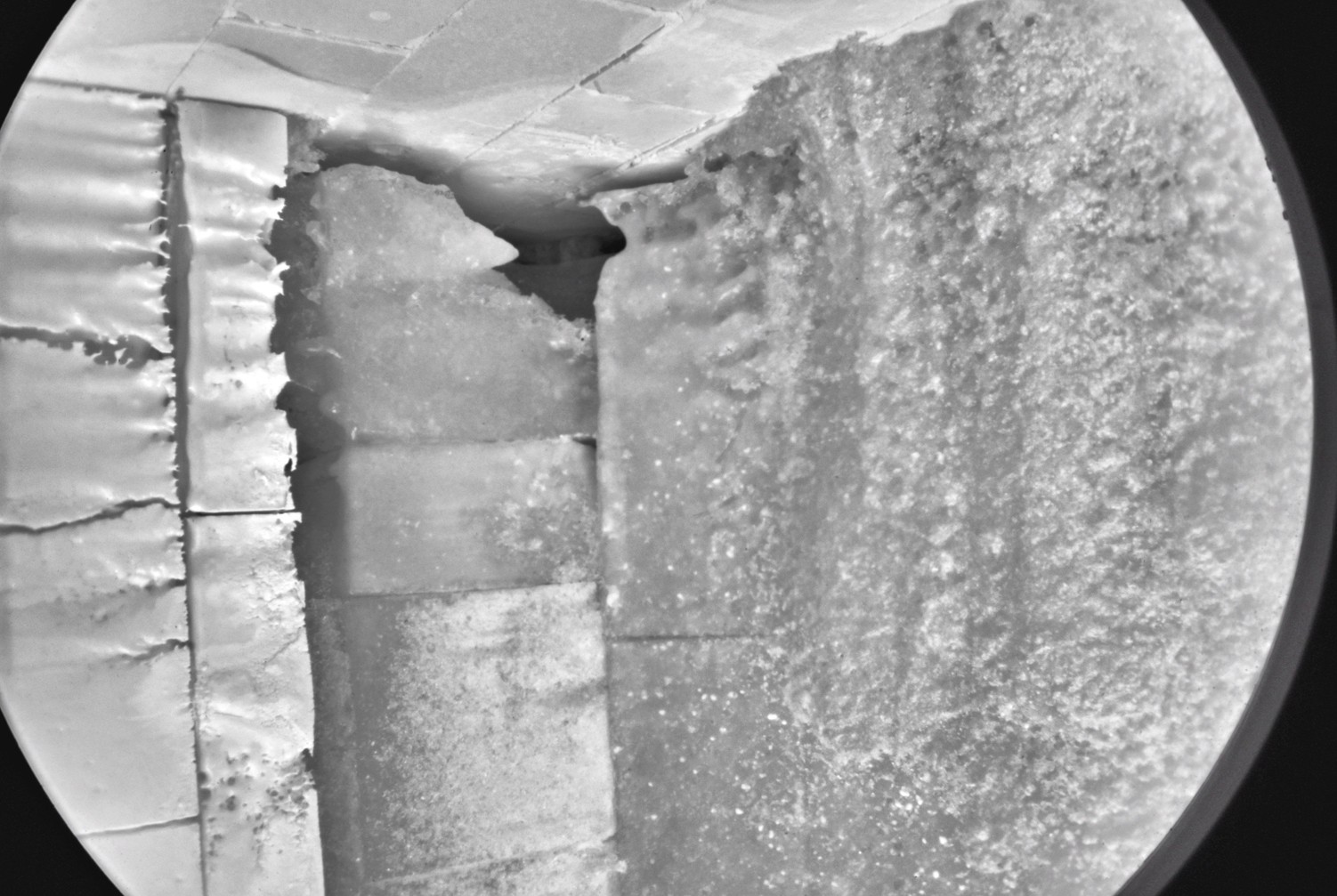
Detecting refractory brick erosion and cracks early, so relining is planned on real wear.
Place 1.mp4 in the site root to play the video here.
Refractory wear decides furnace campaign life, but from outside it is invisible until a red spot or failure appears.
Plants needed a way to measure brick condition while the furnace stayed hot, instead of guessing on a fixed schedule.

Gradual loss of refractory thickness and uneven wear.
Thermal-stress cracks and expansion damage.
Localised peeling before major failure.
Build-up affecting heat distribution.
Local thin zones and abnormal temperature.
Geometry changes in the lining.
Use an existing port near the area of concern.
View the brick line and surface condition live.
Track wear against previous inspections.
Provide references for relining decisions.
Tell us your furnace type and the lining areas of concern — we will recommend the right configuration.